Electric Golf Cart Explained: What It Is and How It Works
Used New Car is reader-supported: some links on this page are affiliate links, and as an Amazon Associate Used New Car earns from qualifying purchases at no extra cost to you. Learn more.
An electric golf cart is a battery-powered vehicle designed for short-range transport on grass, paths, and light terrain. You need a vehicle that provides consistent mobility without the logistical requirements of fuel storage or internal combustion engine maintenance. You should measure your required travel distance against the available battery capacity to determine if a single charge meets your specific needs.
How electric golf carts solve last-mile transit and mobility problems
Most buyers seek an electric golf cart to solve the problem of “last-mile” transit where a standard car is impractical or prohibited. Whether moving people across a large property, transporting equipment between locations, or navigating a golf course, these vehicles eliminate the need for constant walking. They replace the physical strain of hauling heavy loads with a consistent, low-speed mobility solution that operates quietly and produces no exhaust emissions.
How an Electric Golf Cart Functions
The operation of an electric golf cart follows a linear progression of energy conversion from chemical storage to mechanical motion.
If you need extra seating, see our comparison of the best 4 seater electric golf cart options.
- The battery pack stores energy as chemical potential, which is released as electricity when a circuit is completed.
- The controller acts as the brain of the system, receiving a signal from the throttle to determine how much current to send to the motor.
- The electric motor converts that electrical current into rotational force, known as torque.
- The torque converter manages the transmission of that force to the wheels, ensuring the cart can start from a standstill and maintain speed on inclines.
- The differential distributes this rotation to the rear wheels, allowing them to turn at different speeds to facilitate steering.
Electric Golf Carts we have reviewed in detail
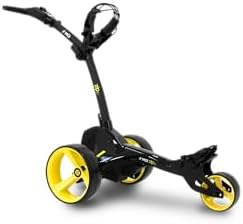
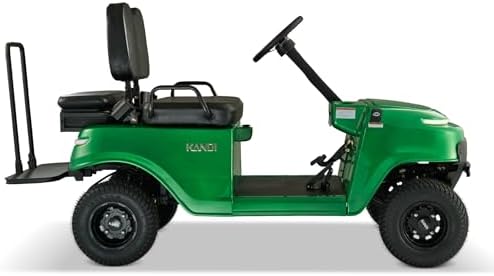
Prices across these 3 run from $1119 to $7999; each one has a full review here.

Mechanical and Electrical Components That Impact Electric Golf Cart Performance
Several mechanical and electrical stages determine how a battery powered cart behaves under load or on specific terrains.
For automated driving, you can find the top-rated electric golf cart with remote control here.
How a controller regulates power flow for smooth cart acceleration
The controller regulates power flow from the battery to the motor based on throttle input. It ensures that the acceleration feels smooth rather than jerky, and it protects the motor from drawing too much current during heavy climbs. Without a high-quality controller, the cart might struggle to maintain a steady pace when carrying multiple passengers.
Why a torque converter provides leverage for climbing hills
The torque converter provides variable gear ratios for smooth acceleration and hill climbing. Because electric motors have different torque curves than gas engines, the converter ensures the vehicle has the necessary leverage to move heavy weight from a dead stop without stalling. It allows the cart to maintain steady power even as the physical resistance of a hill increases.
How a differential enables traction and smooth turning for buggies
The differential enables power distribution to both rear wheels for traction and turning. By allowing the wheels to rotate at different speeds, the differential prevents the tires from scrubbing or dragging during a turn. This is what allows a golf buggy to navigate tight corners on a path without the rear end sliding out.
Many facilities prefer a specialized vehicle, so browse our guide to the best golf shuttle for transport.
How the steering knuckle determines front wheel stability and geometry
The steering knuckle determines the geometry and stability of the front wheel assembly. It is the pivot point that connects the steering column to the wheels. The design of this component dictates how much effort it takes to turn the wheels and how stable the front end feels when traveling at higher speeds.
Comparing lead-acid and lithium-ion battery types for golf carts
Power sources are divided into two primary standards: Lead-Acid vs. Lithium-Ion. The choice between lower upfront cost with heavy weight vs. high energy density and cycle life is a primary budget decision. Lead-acid batteries are heavier and require more frequent maintenance, while lithium-ion units offer a lighter profile and a longer overall lifespan before they need replacement.
Rugged environments require specific specs, so see our guide to the best electric golf cart for all terrain.
How AC and DC charging methods affect home infrastructure
Charging methods are defined by AC vs. DC Charging. This determines if the vehicle requires a dedicated industrial charger or a standard wall outlet. Most residential users prefer a system that can be plugged into a standard 110V or 220V outlet, which limits the charging speed but simplifies the infrastructure needed at a home or clubhouse.
Practical Use and Real-World Performance
In practice, the difference between a well-specified cart and an underpowered one shows up during heavy hauling or on steep inclines. If you have four passengers and a heavy cargo load, the motor must provide enough torque to prevent voltage sag, which is the drop in power that occurs when a motor is overstressed. A cart with a high-torque motor will maintain its pace on a hill, while a lower-powered unit may slow down significantly or stall.
How steering knuckles and differentials improve maneuverability on paths
The difference also shows up in the turn radius and maneuverability. A cart with a well-designed steering knuckle and differential will feel nimble on a narrow path. This is critical when navigating around obstacles or in crowded areas where the ability to pivot quickly is more important than top speed. On flat ground, the difference is less noticeable, but as the terrain becomes more complex, these mechanical components dictate the ease of operation.
Different needs require different designs, so view the various types of electric golf carts we offer.
How battery weight affects the handling and cost of carts
The weight of the battery system changes the handling of the vehicle. A lead-acid setup places a significant amount of weight over the frame, which can affect the center of gravity. Lithium-ion systems allow for a lighter build, which can improve the acceleration and the way the cart handles on uneven ground, as there is less mass to move. However, for a buyer who only uses the cart once a week, the lower upfront cost of lead-acid may be the more practical choice.
Common Questions About Electric Golf Carts
How does it handle on grass versus on a paved path?
An electric golf cart handles grass by relying on the traction of the tires and the torque of the motor to push through soft surfaces. On a paved path, the cart moves more efficiently because there is less rolling resistance. You will notice a slight decrease in speed and a higher draw on the battery when moving over thick grass compared to smooth asphalt.
For a compact option, see our spec breakdown of the Kandi Mini Golf Cart.
How does the polyurethane tire hold up on wet grass or sand?
Polyurethane tires provide a balance between grip and durability on various surfaces. On wet grass, the material provides enough friction to prevent slipping, though it may slide more than a specialized turf tire. In sand, the solid nature of polyurethane prevents the tire from filling with debris, allowing for consistent movement where a hollow tire might get bogged down.
How does it handle grass vs. pavement compared to bigger carts?
Smaller electric golf carts often have a tighter turning radius and are easier to maneuver on narrow grass paths than larger, heavier carts. While they might have less top speed on a long paved road, their ability to navigate tight spaces makes them more versatile for many golf courses. Larger carts provide more stability and speed but can be difficult to turn in confined areas.
How does the lithium battery life compare to standard lead-acid options?
Lithium-ion batteries typically offer a much higher cycle life, meaning they can be charged and discharged hundreds of times before losing significant capacity. Lead-acid batteries degrade much faster and often require replacement every few years. While the initial cost of lithium is higher, the long-term value comes from the fact that the battery holds its charge better over several seasons.
Detailed performance data is available in our full Zip X1 spec breakdown.
Does it handle grass and dirt well or is it just for paved paths?
Most electric golf carts are designed to handle grass and dirt effectively as part of their primary function. They are not limited to paved paths, provided the ground is not excessively muddy or steep. For best results on unpaved surfaces, the cart should have a motor and torque converter capable of providing consistent power to overcome the resistance of the soil.
Who Needs an Electric Golf Cart
A person needs an electric golf cart if they require frequent transport across a large property, such as a farm, a large estate, or a golf course. It is also a practical choice for those who need to move heavy loads of equipment or supplies without the physical strain of a manual cart. If your primary requirement is moving 1 to 4 people over distances of 1 to 3 miles, a battery powered cart is a suitable solution.
For a foldable solution, view our full 000-GS Fold-up Cart spec breakdown.
Situations where an electric golf cart is not the right choice
A person does not need an electric golf cart if their transport needs are limited to very short distances where walking is feasible, or if they require high-speed travel on public roads. Since these vehicles are designed for low-speed use, they are not suitable for commuting between towns or for transport on highways. If you do not have a designated area for charging or a need for frequent, short-range mobility, the utility of the cart may not justify the cost.
Before ordering, confirm the current local rules for your specific location to ensure the vehicle meets any local requirements for operation on private or public land.
The other battery powered cart guides we have published
- Which 4 Seater Electric Golf Cart Is Best?
- Best Electric Golf Cart with Remote Control
- Long Range Electric Golf Carts Under $8500 Compared
- Choosing the Best Golf Shuttle for Transport
- The Electric Golf Carts That Work Best with Lithium Batteries
- Which Electric Golf Cart Is Best for Neighborhood Use?