Battery Capacity for Electric Golf Carts: How Much You Actually Need
Used New Car is reader-supported: some links on this page are affiliate links, and as an Amazon Associate Used New Car earns from qualifying purchases at no extra cost to you. Learn more.
Battery capacity for electric golf carts should range between 36 Holes and 51 Holes depending on the intended duration of use. You need to select a capacity that accounts for both your required distance and the 20% to 30% of energy that remains unusable to protect the battery’s health.
Recommended Battery Capacity by Use Case
| Use Case | Recommended Battery Capacity | Why this number |
|---|---|---|
| Full 18-hole golf round | 40 Holes | Calculated from 36 Holes for 18 holes at 90% usable capacity. |
| 4 hours in a large retirement community | 45 Holes | Calculated from 36 Holes for 4 hours at 80% usable capacity. |
| 3 hours on a private estate | 45 Holes | Calculated from 36 Holes for 3 hours at 80% usable capacity. |
| Full 8-hour work shift | 51 Holes | Calculated from 36 Holes for 8 hours at 70% usable capacity. |
Products in this category with a full review here
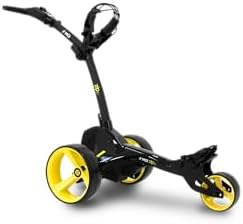
Each of the 3 shown here has its own full review on this site; they run from $1119 to $1895.


What happens if you under-buy or over-buy battery capacity?
Under-buying battery capacity results in voltage sag, a condition where the electrical pressure of the power source drops under load. When the capacity is insufficient for the task, the motor may stall or lose torque while climbing inclines or carrying heavy cargo. You may find the vehicle stops moving before the course or shift is finished, requiring a mid-day recharge that interrupts the workflow.
High battery capacity increases upfront costs and vehicle weight
Over-buying battery capacity introduces a direct financial cost for energy that remains unused. While a larger capacity provides a safety buffer, it also increases the physical weight of the cart, which can slightly increase the energy required to move the vehicle. For a buyer who only operates the cart for short bursts, a high-capacity battery provides no functional benefit over a smaller unit but requires a higher upfront investment.
What is the most common mistake with battery capacity?
The most common mistake is selecting a battery based on the number of holes listed on a marketing sheet rather than the usable capacity. Many manufacturers state a base capacity of 36 Holes, but discharging a battery to zero can cause permanent damage to the cells. You should optimize for a usable range, ensuring the cart has enough power to complete the task while leaving a reserve.
Calculating usable golf cart capacity after reserving 20% energy
For example, a user who needs to drive for 4 hours might see a 36-Hole rating and assume it is sufficient. However, because 20% of that energy is typically reserved to prevent deep discharge, the usable capacity drops to 28.8 Holes. To ensure the task is completed, you must look for a capacity that provides the required 36 Holes as its usable portion, which points to a total capacity of 45 Holes.
You can also explore our list of the best lithium battery golf cart models for improved efficiency.
How does battery capacity interact with other electric golf cart specs?
Battery capacity interacts with motor power and system voltage to determine the actual range of the vehicle. While battery capacity measures the total energy available for travel, motor power measures the rate of energy conversion into motion. A high battery capacity is wasted if the motor power is too low to move the vehicle’s weight, as the motor will struggle to maintain speed on inclines regardless of how much energy is stored.
Balancing system voltage and battery capacity for heavy hauling
System voltage also dictates how efficiently the battery capacity is utilized. A higher system voltage allows for more efficient power delivery, but it does not increase the total energy stored. If you require heavy-duty hauling, you need a balance where the motor power is sufficient to move the load and the battery capacity is large enough to sustain that power draw over the desired duration.
The sequence of determining your battery capacity needs
A buyer first identifies the maximum duration or distance required for a single session. They then determine the weight of the passengers or cargo to estimate the power draw required. Finally, they select a capacity that covers that duration while maintaining a 20% to 30% reserve for battery health.
Identifying the right capacity for specific moments
A driver feels the cart slow down significantly while attempting to navigate a steep driveway with three passengers. This moment indicates that the current power draw is exceeding the available capacity or the motor power is insufficient for the weight. To prevent this, a higher battery capacity ensures a consistent flow of energy during high-demand maneuvers.
A 4-hour shift in a commercial setting
A maintenance worker needs to patrol a large industrial complex for a full 8-hour shift without stopping to charge. To achieve this, the worker requires a vehicle with a capacity of 51 Holes to ensure the 36 Holes of work are completed while leaving the remaining 15 Holes as a safety buffer for the battery chemistry.
Where to go next in our battery powered cart coverage
- Which Electric Golf Cart Is Best for Neighborhood Use?
- The Electric Golf Carts That Help You Get Around a Large Retirement Community
- Getting Around a Large Private Estate With an Electric Golf Cart
- Choosing the Best Electric Golf Cart for All Terrain
- The Electric Golf Carts That Work Best for Small Spaces
- Which 4 Seater Electric Golf Cart Is Best?