Leather Thickness for Motorcycle Race Suits: How Much You Actually Need
Used New Car is reader-supported: some links on this page are affiliate links, and as an Amazon Associate Used New Car earns from qualifying purchases at no extra cost to you. Learn more.
Leather thickness for a motorcycle race suit should be between 1.2 mm and 1.5 mm for most high-performance applications. You need this specific range to ensure the material can withstand the intense friction and heat of a high-speed slide without tearing or melting.
Recommended Leather Thickness for Motorcycle Race Suits
| Use Case | Recommended Leather Thickness | Why this number |
|---|---|---|
| High-speed track riding | 1.2 mm to 1.5 mm | Withstanding high-speed friction without melting requires this density. |
| Heavy abrasion protection | 1.2 mm to 1.5 mm | Withstanding heavy abrasion over a long slide requires at least 1.2 mm. |
| Full season track use | 1.2 mm to 1.5 mm | Enduring a full season of track use requires a minimum of 1.2 mm. |
| Casual street riding | 1.0 mm to 1.2 mm | Lower friction environments allow for slightly thinner hides to reduce weight. |
Motorcycle Race Suits we have reviewed in detail
Each of the 3 shown here has its own full review on this site; they run from $199.99 to $1299.95.


What happens if you go under or overbuy leather thickness?
If you choose a motorcycle race suit with leather thinner than 1.2 mm, the material risks failing during a slide. Thin leather lacks the mass to dissipate heat effectively, which can lead to the hide melting or tearing under high-speed friction. This failure occurs because the material cannot sustain the mechanical stress of the slide for the necessary duration.
You can view our detailed analysis in our full W331R-S Leather Suit review.
Excessive leather thickness increases weight and reduces rider mobility
Overbuying leather thickness results in a suit that is significantly heavier and less mobile. While a 1.5 mm hide offers high durability, every extra fraction of a millimeter adds weight to the shoulders and arms. This extra weight can cause premature fatigue during a long ride. You pay for durability that you might never use if your riding style does not involve extreme high-speed friction.
What is the most common mistake with leather thickness?
The most common mistake is assuming that a higher leather thickness number automatically equates to a safer or better motorcycle race suit. Buyers often focus solely on the hide gauge while overlooking the construction methods and the quality of the leather itself.
Abrasive friction melt resistance matters more than hide depth
You should optimize for the balance between hide thickness and the specific area of coverage. A thick hide in the wrong place does not provide the same protection as a correctly placed, correctly specified hide. Instead of just looking for the highest number, check the material’s ability to resist abrasive friction melt. This is a physical property of the hide’s grain and tanning process, not just its depth.
For more details on that specific model, see our full X-MEN Racing Suit review.
How does leather thickness interact with other deciding specs?
Leather thickness interacts with the suit’s construction and armor density to determine the overall protection of the motorcycle race suit. A high leather thickness figure is wasted if the suit lacks proper internal padding or the correct number of components joined together.
Leather thickness must work in tandem with armor density
The leather acts as the primary barrier against abrasion, but the armor handles the impact energy transfer. If the leather is 1.5 mm but the armor is low-density, the suit will fail to protect against high-velocity impacts. Conversely, high-density armor in a thin suit might provide impact protection but fail to prevent the leather from tearing during a slide. You must ensure the thickness of the hide works in tandem with the armor’s mass per unit of volume.
Get the technical details in our full Speedmaster 5.0 Suit review.
Leather thickness and seam construction affect motorcycle suit mobility
Construction also limits how much leather thickness can be effective. In a 1-piece motorcycle race suit, the leather must be flexible enough to allow for movement. If the hide is too thick for the design of the seams and panels, it can restrict your ability to move your limbs. This creates a trade-off between the durability of the hide and the mobility required for safe operation of the bike.
The 1.2 mm to 1.5 mm range defines high performance suits
When you evaluate the motorcycle race suit, look for the 1.2 mm to 1.5 mm range as your baseline for performance. This range provides the necessary material depth to survive a slide while remaining usable for a human rider. If a suit falls below this range, it may be intended for casual use rather than high-performance track environments. If it significantly exceeds it, you are paying for weight that may hinder your performance on the track.
Specific leather treatments determine performance during a slide
The leather’s performance is also tied to its material type. Some hides are treated to be more resistant to heat than others. When the thickness is within the recommended range, the specific treatment of the leather becomes the deciding factor for how it behaves during a slide. Always check the manufacturer’s documentation for the specific leather type used alongside the thickness measurement.
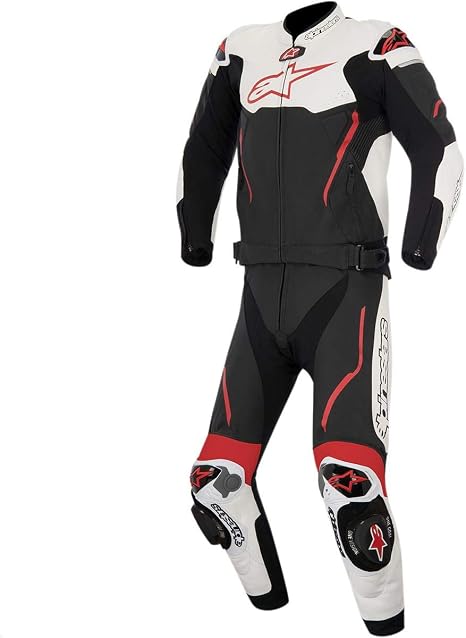
We have provided a detailed breakdown in our full Alpinestars Atem spec review.
Consistent leather thickness across primary impact zones ensures protection
Because leather is a natural material, the thickness can vary slightly across different panels of the same suit. A high-quality motorcycle race suit will aim for consistency across the primary impact zones. When you check the specifications, ensure the thickness provided is the standard for the main body panels, as these are the areas that provide the most critical protection during a fall.
Understanding leather thickness helps choose suits based on physical requirements
Ultimately, the leather thickness is a foundational spec that dictates the suit’s lifespan and its ability to perform its primary task. A suit that stays within the 1.2 mm to 1.5 mm range provides the best opportunity for consistent protection. By understanding these numbers, you can make a decision based on the physical requirements of the sport rather than marketing claims.
The other racing bike suit guides we have published
- The Motorcycle Racing Leather Track Suits That Work Best for 2pc Sets
- Which Motorcycle Race Suit Is Best for Beginners?
- Best Women’s Motorcycle Race Suits
- Single Piece Motorcycle Race Suits Compared
- Choosing the Best Motorcycle Race Suit with Hard Padding
- The Motorcycle Race Suits That Work Best for Street Riding