The Types of Electric Golf Carts, Explained
Used New Car is reader-supported: some links on this page are affiliate links, and as an Amazon Associate Used New Car earns from qualifying purchases at no extra cost to you. Learn more.
Electric golf carts come in three primary types: utility, recreational, and low-speed vehicles, separated by their chassis weight capacity, motor torque profiles, and intended speed limits. You need to identify your heaviest frequent load and the distance of your typical route to determine which category provides the correct balance of battery endurance and structural integrity. Measure your heaviest cargo or passenger count and compare it to the vehicle’s rated capacity before selecting a model.
Utility electric golf carts for heavy work
Utility electric golf carts are defined by high-torque motors and reinforced chassis designed to move heavy loads over short distances. These carts prioritize weight capacity and durability over top speed or smooth ride quality. They are built for maintenance crews, farm operations, or large-scale landscaping where the vehicle serves as a mobile tool rather than a passenger transport.
Utility carts use high-torque motors to move heavy equipment
A utility cart provides the ability to move heavy equipment, such as large planters or heavy tools, without the risk of frame fatigue. These units often feature heavy-duty suspension and high-torque motors that can handle constant, high-load starts. Because they focus on torque, they may have lower top speeds than recreational models and a stiffer ride on uneven terrain.
If you are looking for a vehicle for navigating a large retirement community, explore our specialized roundup.
Reinforced steel components increase the price of utility carts
The price point for utility carts is generally higher than standard recreational models due to the reinforced steel components and heavy-duty drivetrain. If you require a vehicle to move more than 800 lbs of gear, a utility configuration is the necessary choice. Choosing a standard cart for utility work leads to premature frame cracking and motor burnout, requiring a full chassis rebuild or replacement within the first year of use.
Where these choices show up in our reviews
Prices across these 3 run from $1119 to $7999; each one has a full review here.

Recreational electric golf carts for leisure
Recreational electric golf carts are designed for passenger comfort, smooth ride quality, and standard golf course navigation. These carts are built for groups of 2 to 4 people who prioritize a comfortable seat and easy maneuverability over heavy hauling. They are the standard choice for private club use and neighborhood transport.
Newcomers should start by viewing our guide on how an electric golf cart works.
Recreational carts provide a balanced ride for golf course use
Recreational carts offer a balanced experience, providing enough speed to navigate a course efficiently while maintaining a soft ride over grass and small bumps. They typically use lithium-ion or lead-acid batteries optimized for consistent power delivery during a 4-hour period of use. These models give up the heavy-duty hauling capacity of utility carts, meaning they are not suitable for moving heavy machinery or large amounts of bulk material.
Mid-range recreational models offer the best value for average users
These models sit in the middle of the market price range, offering the best value for the average user. A buyer might start by looking at a standard golf cart, find it lacks the comfort of a high-end model, and then decide on a mid-range recreational unit. You end up with a vehicle that handles the daily requirements of a golf course without the unnecessary cost of a heavy-duty utility frame.
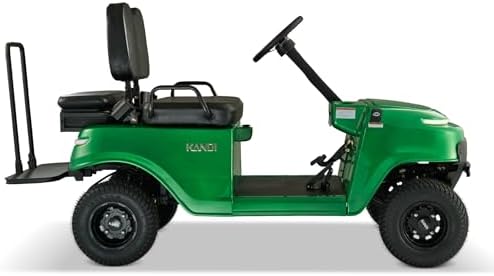
For a more compact option, view our full review of the Kandi Mini Golf Cart.
Low speed neighborhood electric vehicles
Low-speed vehicles (LSVs) are a specific type of electric golf cart designed to meet street-legal requirements in many jurisdictions. These vehicles are defined by specific speed limits, usually 25 MPH, and safety features like windshields, turn signals, and side mirrors. They are for users who need to travel on public roads or in neighborhoods where a standard golf cart is not permitted.
LSVs feature automotive-style bodies for legal travel on paved roads
LSVs provide the ability to travel on paved roads and navigate residential areas legally. They are built with a more automotive-style body, often including a roof and doors. These vehicles give up the off-road capability of a standard golf cart because their tires and suspension are optimized for pavement rather than grass or dirt. They also have more complex electronics to handle street-legal requirements.
Street-legal certifications and safety components increase LSV costs
LSVs sit at the highest price point among these types due to the additional safety components and street-legal certifications. If you need to travel between locations on a public street, you must confirm the current rules for your location before ordering. Because LSVs are built for roads, they may have a narrower turning radius than a standard golf cart, which affects how they move in tight spaces.
Check out our detailed analysis of how the Zip X1 performs.
Comparison of electric golf cart types
| Type | Best-fit buyer | Main advantage | Main compromise |
|---|---|---|---|
| Utility | Landscapers and farm workers | High weight capacity | Low top speed |
| Recreational | Golfers and private club owners | Ride comfort | Limited hauling |
| Low-speed vehicle | Neighborhood commuters | Street legality | Pavement focus |
Which electric golf cart type fits your needs?
To determine which electric golf cart type fits your needs, you must first evaluate the surface where the vehicle will spend 90% of its time. If you are primarily on grass and dirt, a recreational or utility cart is the correct choice. If you need to travel on public roads, a low-speed vehicle is the only option that meets standard safety requirements.
Payload requirements determine the choice between utility and recreational carts
Next, you must determine your maximum payload requirements. If you need to move heavy equipment or more than 500 lbs of cargo regularly, you need a utility cart. If you are only transporting 2 to 4 people, a recreational cart provides a more comfortable ride for the passengers. If your primary use is moving people and light bags, the recreational category offers the best balance of cost and comfort.
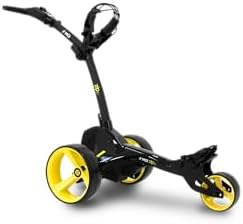
For a closer look at the terrain capabilities, see our full MGI Zip Navigator review.
Battery configurations must support the required travel distance
Finally, check your distance requirements. If you need to travel more than 10 miles in a single trip, you must ensure the battery configuration supports that distance. A recreational cart might be sufficient for a 5-mile round, but a utility or LSV might be required for longer distances to ensure the motor has enough torque to maintain speed with a full load. Always confirm the current rules for your location before ordering to ensure the type you choose is permitted for your specific use case.
Industry benchmarks for durability and parts
The Club Car OnYX serves as the industry benchmark for chassis durability and high-end component integration. In comparison to the data of the models on this page, many options provide similar torque but may use different suspension geometries to achieve ride quality. The EZ-GO TXT is the standard for mainstream reliability and parts availability in the golf cart market.
Browse our other battery powered cart pages
- Long Range Electric Golf Carts Under $8500 Compared
- Choosing the Best Golf Shuttle for Transport
- The Electric Golf Carts That Work Best with Lithium Batteries
- Which Electric Golf Cart Is Best for Neighborhood Use?
- The Electric Golf Carts That Help You Get Around a Large Retirement Community
- Getting Around a Large Private Estate With an Electric Golf Cart