Lifting Speed for 4 Post Car Lifts: How to Choose Yours
Used New Car is reader-supported: some links on this page are affiliate links, and as an Amazon Associate Used New Car earns from qualifying purchases at no extra cost to you. Learn more.
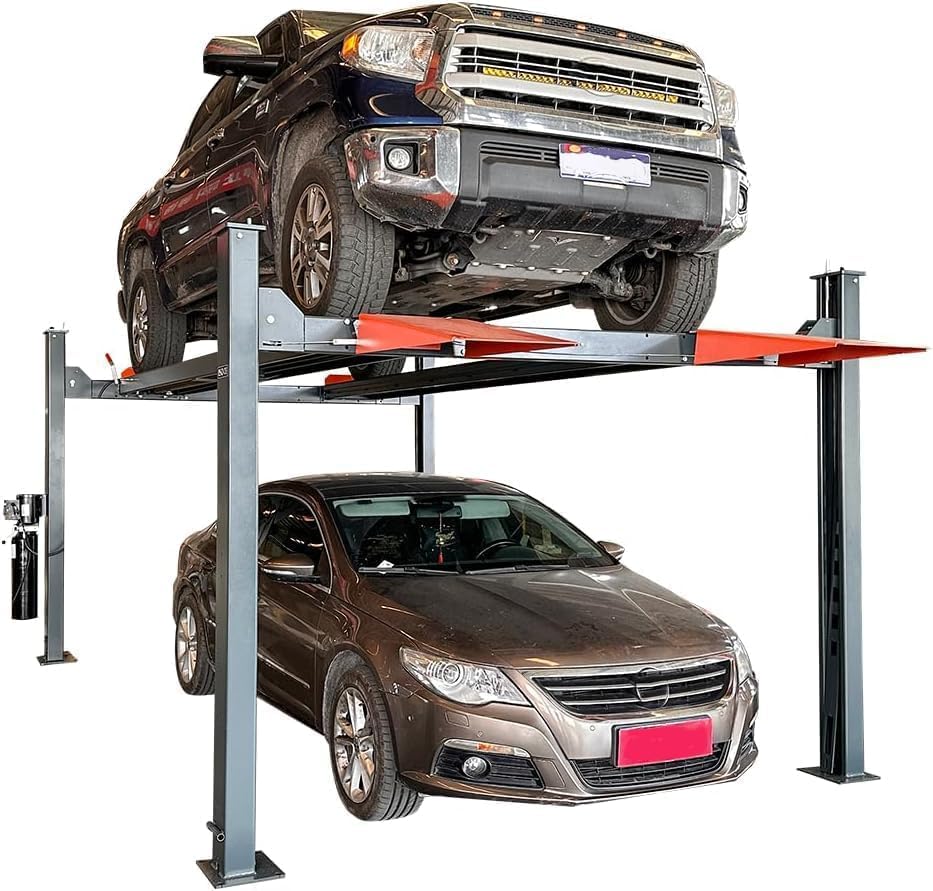
Lifting speed for a 4 post car lift is the vertical velocity at which the platform rises or lowers, measured in inches per second (in/sec). You determine the correct speed based on your required cycle time for vehicle turnover and the specific stability requirements of the vehicles you intend to service.
Which Lifting Speed Suits Your Situation?
| If this is you | The Lifting Speed that suits you | Why |
|---|---|---|
| You run a high-volume commercial repair shop where vehicle turnaround time is the primary metric for profitability. | Higher in/sec (e.g., 4 to 6+ in/sec) | Faster speeds reduce the time a vehicle spends in the air, increasing the number of bays you can service per day. |
| You operate a professional detailing or ceramic coating studio where vehicles remain on the lift for hours. | Moderate in/sec (e.g., 2 to 4 in/sec) | A steady, predictable speed allows for safe positioning without the need for extreme velocity, balancing efficiency with controlled movement. |
| You are a hobbyist mechanic working in a private garage on personal projects and occasional friends’ vehicles. | Lower in/sec (e.g., 1 to 2 in/sec) | Slower speeds provide a more deliberate and controlled ascent, which can feel more stable when working on older vehicles with less predictable weight distributions. |
| You need to move heavy-duty trucks or specialty vehicles with high centers of gravity. | Lower to Moderate in/sec (e.g., 1.5 to 3 in/sec) | Slower speeds minimize the risk of momentum-based swaying, ensuring the vehicle remains perfectly level during the rise. |
| You prioritize a smooth, “luxury” feel for a high-end showroom where clients watch the lifting process. | Moderate in/sec (e.g., 2 to 3 in/sec) | This range provides a consistent, fluid motion that avoids the abrupt starts and stops associated with high-velocity industrial motors. |
Examples from this category, each with its own review here
From $3359 to $5799: 3 of the 4 in this category we have reviewed in full.
Homeowners can compare models in the best 4 post car lift for home garage setups.


How to Measure and Establish Your Lifting Speed Requirement
To establish your required lifting speed, you must calculate your target cycle time based on the height of the lift and the number of vehicles you need to move per hour. A 4 post car lift with a 100-inch maximum rise and a speed of 2 in/sec will take 50 seconds to reach full height, excluding the time required for positioning and safety checks.
Where to Find Lifting Speed on a 4 Post Car Lift
The lifting speed is typically listed in the technical specifications as a value in inches per second (in/sec) or occasionally as a “lifting time” for a specific height (e.g., “8 feet in 45 seconds”). You should look for this value in the motor specifications or the “Performance” section of the manufacturer’s data sheet. If a manufacturer only lists the motor horsepower, you must divide the total lift height by the stated time to derive the in/sec value.
Research the heavy-duty capabilities in our full HPDMC-H150 Car Lift review.
Calculating the required lifting speed for a 4 post car lift
Identify the maximum height you need to reach and the amount of time you are willing to wait for the lift to reach that height. For example, if you need to reach 120 inches and want the lift to be ready in 30 seconds, you require a speed of at least 4 in/sec. Because 4 post car lifts rely on synchronized motors, the speed is limited by the slowest motor in the system, so the stated speed is the maximum velocity the entire platform will achieve.
What Happens if the Lifting Speed is Too Fast or Too Slow?
A lifting speed that is too fast can cause structural deflection or synchronization drift, where the platform moves unevenly. If the motors cannot maintain perfect synchronicity at high velocities, one side of the 4 post car lift may rise slightly faster than the other, causing the vehicle to tilt. This tilt can lead to a tip-over risk or cause the vehicle to bind against the lift posts.
View the data in our full MutsMover 4-Post Lift review for high-capacity needs.
The Risks of Excessive Lifting Speed
When the lifting speed exceeds the mechanical limits of the lift’s components, the primary risk is a “jerky” start or stop. Rapid acceleration puts significant stress on the gears and chains, which can lead to premature wear or “hunting,” where the motor struggles to maintain a constant speed under load. In high-speed systems, any slight imbalance in the vehicle’s weight distribution is magnified, making it harder to keep the vehicle perfectly level during the transition from the ground to the working height.
The Consequences of Low Lifting Speed
A lifting speed that is too slow primarily impacts operational efficiency and workflow. In a commercial environment, a lift that takes 90 seconds to rise may create a bottleneck, causing a backup of vehicles waiting for a bay. While a slower speed is safer for some applications, it may result in the lift being underutilized if the time spent in motion exceeds the time spent performing actual work on the vehicle.
Review the motor specs in our full KT-4H950 4 Post Lift review.
What to Do if You Fall Between Two Lifting Speed Values?
If your requirements fall between two common lifting speed categories, you should prioritize the lower speed for safety and stability. Because 4 post car lifts are designed to carry heavy loads, the stability provided by a slightly slower, more controlled ascent usually outweighs the marginal gains of a faster speed. If you are unsure whether you need 3 in/sec or 4 in/sec, selecting the 3 in/sec option ensures the lift remains within a range where synchronization is easier to maintain across all four posts.
How Vehicle Weight Influences Speed Selection
The actual speed of a 4 post car lift often decreases as the weight of the vehicle increases. A motor rated for 5 in/sec might only achieve 3 in/sec when lifting a heavy-duty truck at its maximum capacity. When choosing between two speeds, consider the heaviest vehicle you intend to lift; if that vehicle is near the lift’s maximum weight capacity, you should choose a lift with a motor designed for high-torque, lower-speed operation to ensure consistent movement.
See the performance data in our full BendPak HD-7W review.
Choosing the Right Speed for Your Workspace
Deciding on a lifting speed is about matching the machine’s output to your specific workflow. If your goal is to move cars quickly to keep a line moving, a higher in/sec rating is necessary to prevent the lift from becoming a bottleneck. However, if your goal is to perform precision work where the vehicle must remain perfectly still and level, a moderate speed provides the most predictable movement. If you are unsure of your needs, a 3 in/sec to 4 in/sec range is a common middle ground that serves both professional and serious hobbyist needs without the risks of extreme high-speed synchronization.
Every 4 post car lift guide in this category
- Heavy Duty 4 Post Car Lifts for Trucks Under $4000 Compared
- Choosing the Best 4 Post Car Lift for Limited Space
- The 4 Post Car Lifts That Work Best for Beginners
- Which 4 Post Car Lift Handles a Heavy Truck for Undercarriage Repair?
- The 4 Post Car Lifts That Lift a Large Van for Maintenance
- Home Garage 4 Post Car Lifts Compared